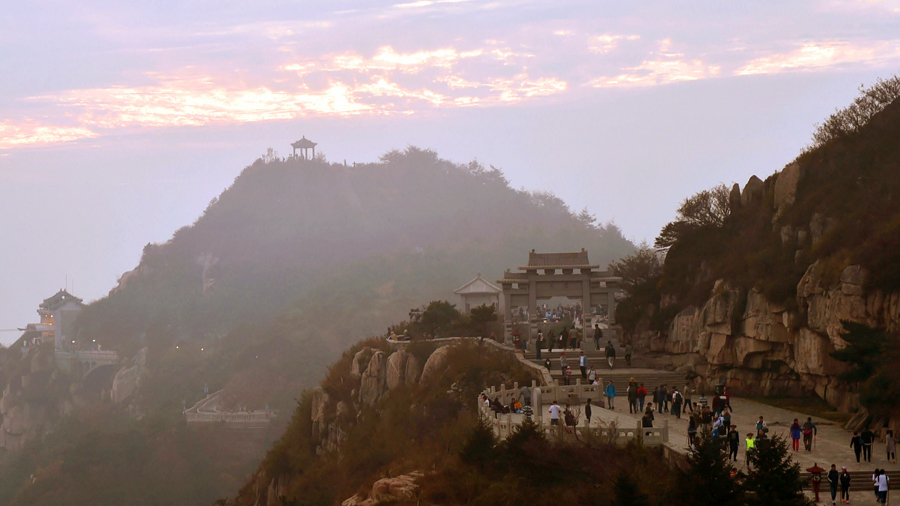
China's Five Sacred Mountains
Introduction
China's Five Sacred Mountains, known as "Wu Yue" in Chinese, are revered as significant cultural and natural landmarks across the country. The mountains include Taishan, Hengshan (in Hunan, known as the Southern Sacred Mountain or Nanyue), Hengshan (in Shanxi, known as the Northern Sacred Mountain or Beiyue), Huashan, and Songshan. Each mountain is associated with cardinal directions and holds profound historical, cultural, and spiritual significance in Chinese society.
Historical Significance
Historically, these mountains have served as important sites for pilgrimage and worship. Taishan Mountain, located in Shandong province, has been a focal point for Chinese emperors, with seventy-two emperors from different dynasties performing sacrificial ceremonies there. This tradition underscores the mountain's pivotal role in ancient Chinese state rituals and its symbolic connection to the heavens.
Mount Heng in Hunan is known for its association with the fire god Zhurong, a figure of ancient Chinese legends. The mountain's highest peak, Zhurong Peak, is named after the deity, reflecting its deep-seated historical roots in Chinese mythology and the fire culture that emerged around it.
Mount Huashan, located in Shaanxi province, has been a site of religious significance since ancient times, known for its steep peaks and challenging paths, which symbolize the spiritual journey of overcoming obstacles in pursuit of enlightenment.
Cultural Importance
The Five Sacred Mountains are integral to China's cultural heritage, representing more than just natural beauty. They are embodiments of religious and philosophical thought, particularly embodying the principles of Confucianism, Taoism, and Buddhism.
The mountains have deeply influenced Chinese philosophical thought. According to the Doctrine of the Five Elements, each mountain corresponds to an element and a direction, which plays into the broader cosmological and philosophical systems of ancient China. These principles guided the way in which the Chinese emperors and their subjects viewed the world and their place within it, integrating ideas of balance and harmony that are central to Chinese philosophy.
Role in Chinese Literature
The mountains have also been celebrated in Chinese literature, inspiring poets and scholars throughout history. Taishan, for instance, attracted luminaries such as Confucius, Sima Qian, and Li Bai, who left behind inscriptions and compositions that are still revered today. These literary works often delve into themes of nature, human existence, and the divine, showcasing the mountains as sources of artistic inspiration.
Geography and Location
The Five Sacred Mountains are geographically diverse, each offering unique landscapes and ecological environments that contribute to their distinctiveness.
Overview of Each Mountain
Taishan Mountain: Situated in Shandong province, it rises to 1,545 meters and covers an area of 25,000 hectares. It is characterized by imposing rock masses, ancient trees, and cultural relics dating back to the Neolithic period.
Hengshan (Hunan): Known for its lush forests and diverse flora, it serves as a major Taoist and Buddhist site. Hengshan is also famed for hosting numerous temples and the culturally significant Zhurong Peak.
Hengshan (Shanxi): This Hengshan is sometimes called the "Northern Hengshan" to distinguish it from its southern counterpart in Hunan province. It is known for its historical and military significance, having been a site of strategic importance.
Huashan: Recognized for its dramatic and steep peaks, Huashan is located in Shaanxi province and is part of the Qinling mountain range. It is known for its challenging trails and breathtaking views.
Songshan: Located in Henan province, it is noted for the Shaolin Temple, a center of Zen Buddhism and martial arts, adding a rich layer of cultural history to its natural beauty.
Climate and Biodiversity
The climate and biodiversity of the Five Sacred Mountains vary greatly due to their geographical spread across China. Taishan and Huashan experience a temperate climate, supporting a diverse range of flora and fauna. Hengshan in Hunan, with its subtropical climate, is known for its exotic plant species and vibrant forests, contributing to its reputation as a haven for biodiversity. These varied ecosystems are vital not only for their ecological significance but also for their contribution to the cultural and spiritual atmosphere of each mountain.
Pilgrimage and Tourism
The Five Sacred Mountains have been destinations for pilgrims and tourists for centuries, offering spiritual solace and natural beauty.
Pilgrimage to these mountains is a time-honored tradition, deeply embedded in Chinese cultural and religious practices. Ceremonial rituals, such as the Fengshan sacrifices on Taishan, were central to maintaining the divine mandate and expressing reverence for the natural world. Pilgrims often undertake arduous journeys to reach these sacred sites, reflecting their devotion and the mountains' spiritual significance.
Modern Tourism Development
In recent years, the Five Sacred Mountains have become major tourist attractions, drawing visitors from around the world. Developments in infrastructure and tourism services have facilitated access while attempting to preserve the cultural and natural integrity of the sites. Events like the Taishan International Mountain Climbing Festival highlight the mountains' role in promoting cultural exchange and tourism.
Conservation Efforts
Efforts to conserve the Five Sacred Mountains focus on balancing tourism development with the preservation of their cultural and natural heritage. Initiatives include protecting biodiversity, maintaining historical sites, and promoting sustainable tourism practices. These efforts are critical to ensuring that the mountains remain vital cultural and ecological landmarks for future generations.








